
Magnetic letters are an easy and powerful way to help your child understand how words work. This simple hands-on activity turns reading and spelling into play. Here’s exactly how to do it—and why it works.
What You’ll Need
A magnetic board (a refrigerator door works too)
A full set of magnetic letters (uppercase or lowercase is fine—just be consistent)
A few minutes of quiet time together
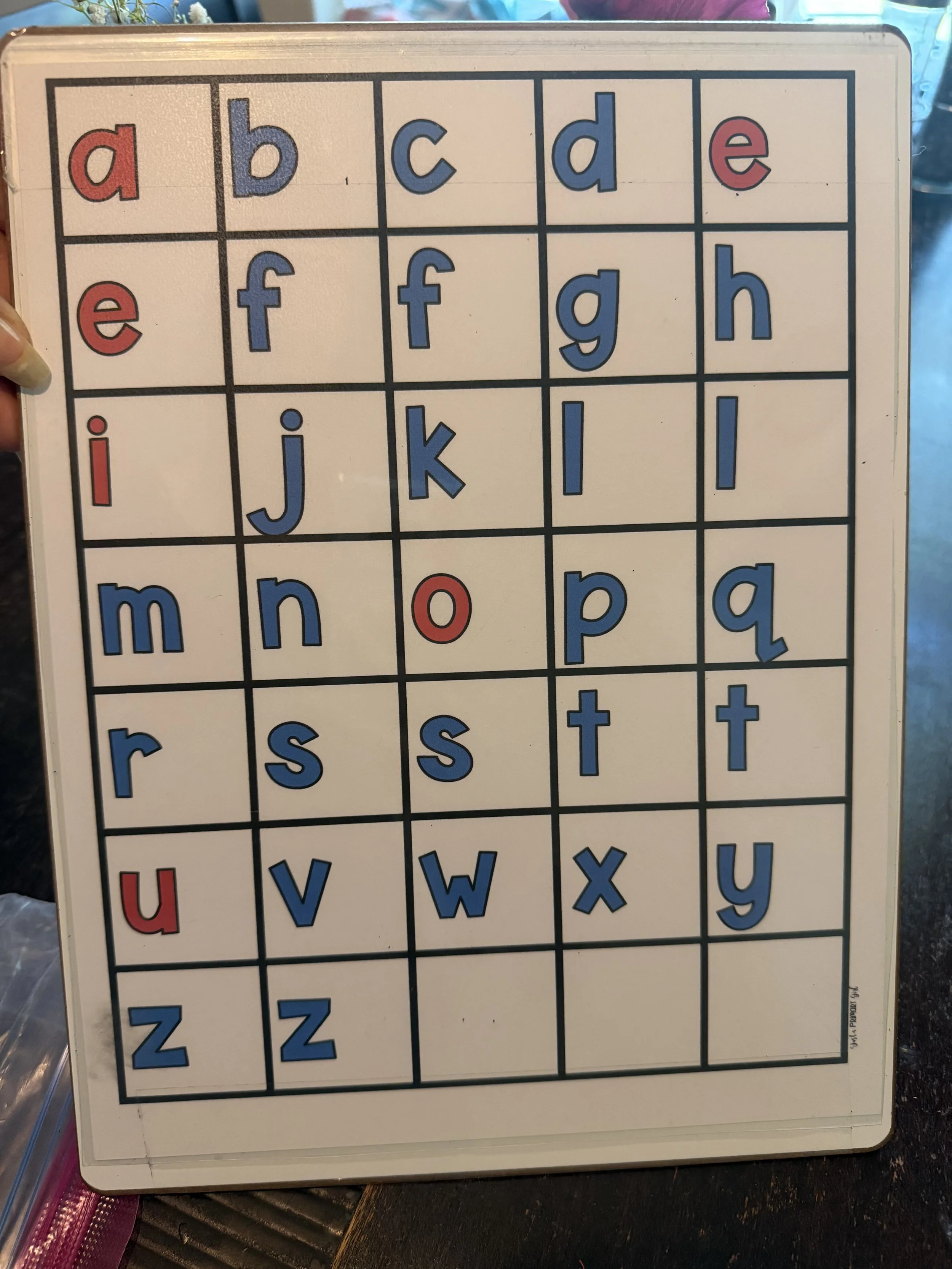
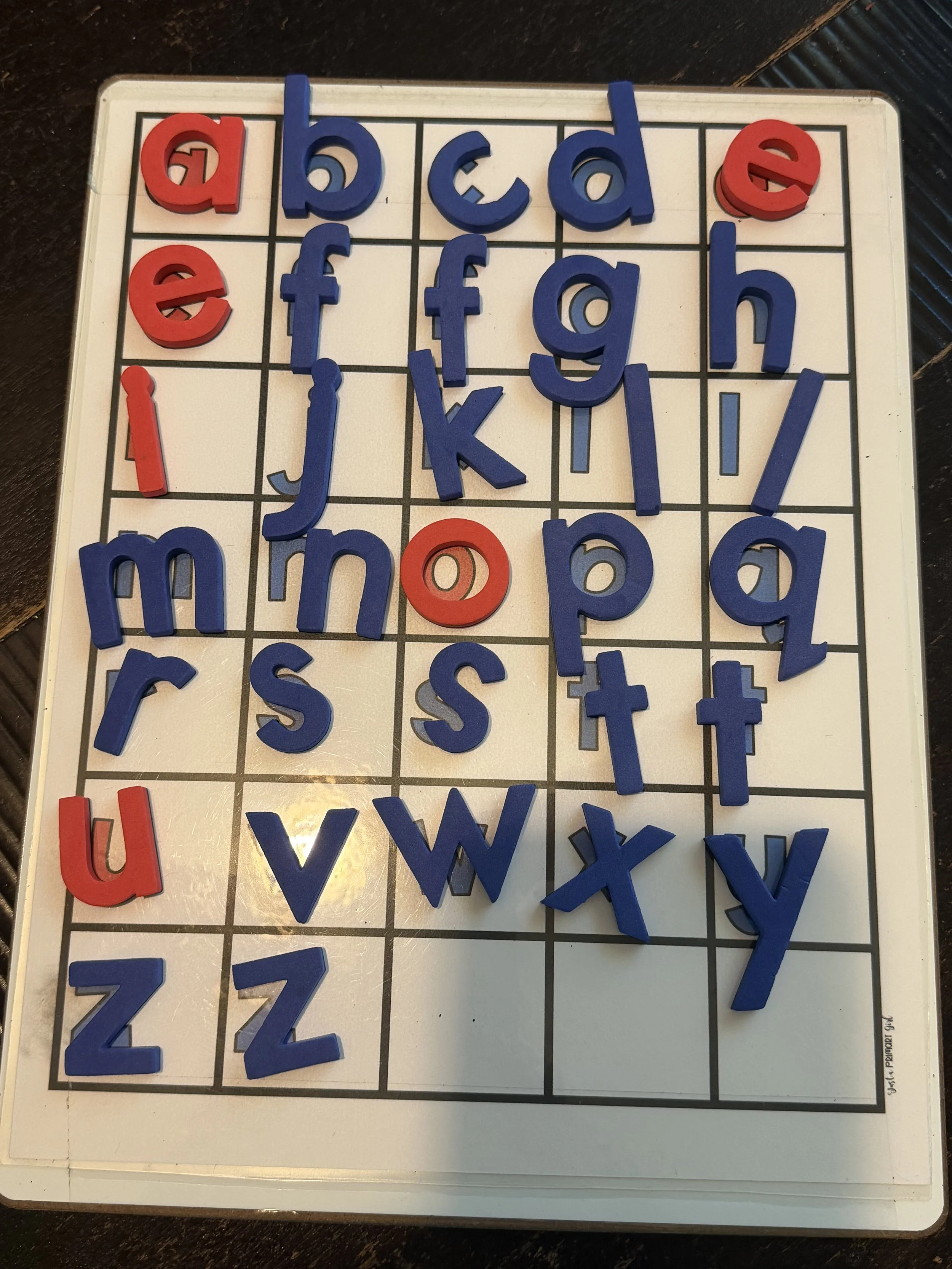
Step-by-Step: Making Words Together
1. Say the Word Aloud
Pick a simple, short word—something like cat, sun, or bed.
Say the word clearly, and have your child repeat it.
“Let’s make the word ‘sun.’ Say it with me—sun.”
2. Count the Sounds
Help your child listen for the individual sounds (phonemes) in the word.
Stretch the word slowly: s-u-n.
Hold up a finger for each sound as you say it.
“How many sounds do we hear in ‘sun’? S, u, n—three sounds!”
(Important note: we’re focusing on sounds, not letter names yet.)
3. Identify the Letters that Match the Sounds
Now connect those sounds to letters.
“The first sound is /s/. What letter makes /s/? S!”
“Next is /u/. That’s the short u—like in ‘up.’”
“Last sound, /n/. What letter makes that? N!”
If your child isn’t sure, you can guide them with gentle prompts or show choices.
4. Build the Word
Have your child find each letter and place it on the board in order: S - U - N.
Say each sound again as they place it.
“S makes /s/, U makes /u/, N makes /n/ — SUN.”
5. Blend and Read the Word
Once all letters are in place, run your finger under the word from left to right.
Say each sound smoothly, then blend them together.
“Let’s read our word. Ssss—uuh—nnn... sun!”
Celebrate their success—reading a word they built feels great!
6. Check and Talk About It
Ask if the word looks right or sounds right when you read it.
Encourage your child to make small changes (swap one letter, make fun or run) to see how new words form.
Why This Works
This simple routine builds phonemic awareness (hearing and working with sounds in words) and phonics skills (connecting sounds to letters). Both are critical early reading foundations.
Magnetic letters make learning active and visual:
Kids can physically move sounds around to “see” how English words change.
It reinforces letter recognition and sound-letter mapping.
It helps children go from hearing words to making and reading them—linking listening, speaking, and reading together.
Most importantly, your child feels successful. They can see that they’re making real words, which builds confidence and motivation to read more.
Quick Tip
Start with short, simple CVC words (consonant-vowel-consonant), like dog, map, sit, and pen. As your child gets more comfortable, you can move to words with blends (flag), digraphs (ship), and r-controlled vowels (car).
