
Helping Your Child Understand Multiplication: A Parent-Friendly Guide to Learning Through Play
If you’ve ever sat down to help your child with multiplication and thought, “This looks so different from when I learned it,” you’re not alone. Today, kids aren’t just asked to memorize multiplication facts—they’re encouraged to understand what multiplication actually means. And that’s a good thing.
When children understand multiplication, they build a strong math foundation that supports everything from division to fractions and even algebra later on. Memorization still matters—but it becomes easier and more meaningful when it’s built on patterns, visuals, and hands-on experiences.
The goal isn’t to drill flashcards endlessly. Instead, we want kids to learn through play, notice patterns, and make sense of numbers.
Let’s walk through simple, practical ways you can support your child at home—even if you’re not a math expert.
Make it fun!
Make it fun!
🌟 What Is Multiplication, really?
At its core, multiplication is just repeated addition.
3 × 4 means: 3 groups of 4
Or: 4 + 4 + 4
Helping your child see and build this idea makes everything else click.
🟦 1. Arrays (Seeing Multiplication)
Arrays are one of the most powerful ways to understand multiplication.
An array is a set of objects arranged in rows and columns.
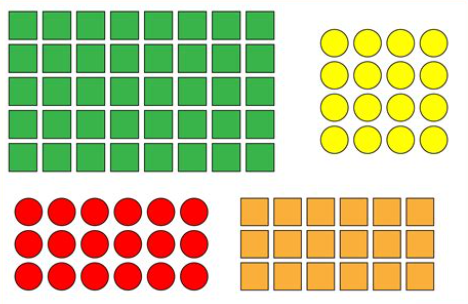
Try this at home:
Use snacks like grapes or crackers
Make 3 rows of 6
Ask: “How many total?”
Then flip it:
6 rows of 3
Same total!
💡 This helps kids see that:
3 × 6 = 6 × 3 (commutative property)
Make it fun:
Build arrays with LEGO bricks
Draw them with dots on paper
Use an egg carton for smaller numbers
🟩 2. Equal Groups (Real-Life Multiplication)
Multiplication is also about making equal groups.
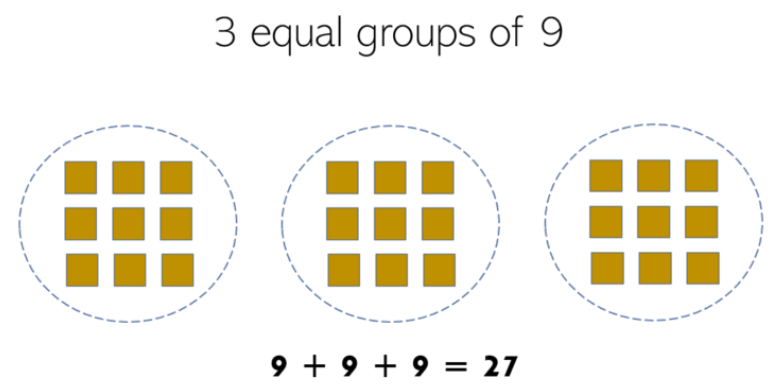
Try this:
“We have 3 plates. Let’s put 9 carrots on each plate.”
Then count total carrots together. “We have 27 carrots.”
Other ideas:
Groups of toys
Socks in pairs
Chairs at the table
💡 Ask questions like:
“How many groups do we have?”
“How many in each group?”
“How many total?”
This builds understanding naturally.
🟨 3. Number Lines (Jumping Through Multiplication)
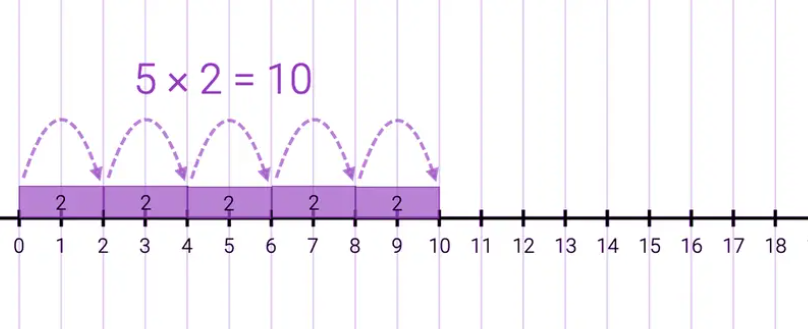
A number line helps kids see multiplication as equal jumps.
Example: 2 × 5
Start at 0
Jump 2, five times
Land on 10
Try this:
Draw a number line on paper
Use a marker or finger to “jump”
💡 This is especially helpful for kids who like movement or visual steps.
🟥 4. Base Ten Blocks (Building Bigger Numbers)
When numbers get larger, base ten blocks help kids see place value while multiplying.
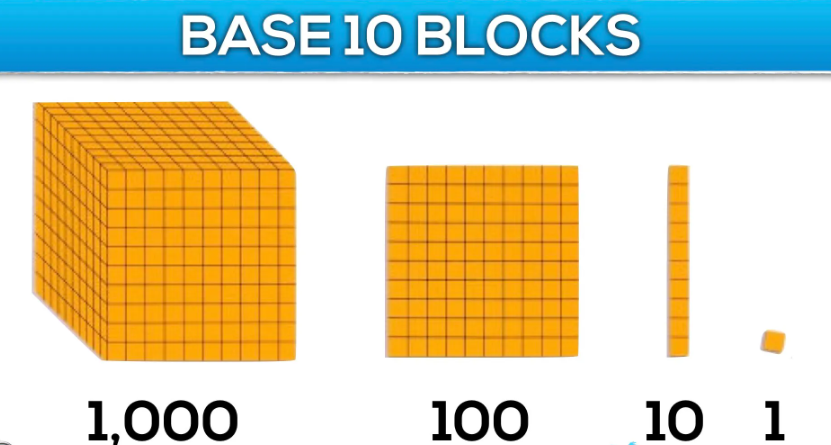
Example: 4 × 12
Build 12 with blocks (1 ten + 2 ones)
Make 4 groups of that
Now count:
4 tens = 40
8 ones = 8
Total = 48
💡 This helps kids understand multiplication beyond just memorizing.
4. Area Models: Breaking Numbers Apart
Area models help kids multiply larger numbers by breaking them into smaller, easier parts.
Think of it like building a rectangle.
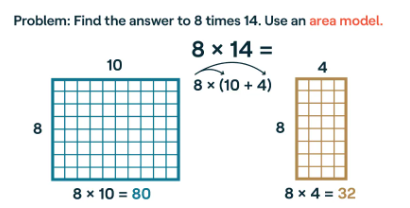
Example: 8 × 14
Break 14 into 10 + 4
Multiply each part:
8 × 10 = 80
8 × 4 = 32
Then add:
80 + 32 = 112
💡 This shows kids that big problems can be solved in smaller steps.
Try this at home:
Draw a rectangle and split it into parts
Label each section
Solve each piece, then add together
This method builds strong number sense and helps prepare kids for more advanced math later on.
🎯 5. Easy Patterns to Learn First
Some multiplication facts are easier—and noticing patterns builds confidence quickly.
✋ Multiplying by 5
Answers end in 0 or 5
Skip count by 5s: 5, 10, 15, 20…
Practice with counting fingers!
✌️ Multiplying by 2
Just double the number
2 × 6 = double 6 = 12
Make it fun:
“Double it” game
Double snacks, toys, or steps
🚫 Multiplying by 0
Any number × 0 = 0
Explain it like this:
“If you have 5 groups of nothing… you still have nothing!”
🎲 6. Turn Practice into Play
This is where learning really sticks.
Simple games:
Roll two dice → multiply the numbers
Card game: flip two cards → multiply
Array scavenger hunt: find arrays around the house
Creative ideas:
Build multiplication facts with LEGO
Draw comic strips showing groups
Use sidewalk chalk for number lines
❤️ Final Thoughts for Parents
Your child doesn’t need you to be a math expert—they just need you to be curious with them.
Instead of focusing only on getting the right answer, try asking:
“How did you figure that out?”
“Can you show me another way?”
“What do you notice?”
When kids learn multiplication through play, patterns, and understanding, memorization becomes much easier—and much less stressful.
You’re not just helping them learn math.
You’re helping them build confidence, problem-solving skills, and a mindset that says:
👉 “I can figure this out.”
